Jak dzbanek
robi to, co system pod zlew.
Cztery technologie filtracji w jednej opatentowanej matrycy węglowej. Inżynieria otwarta — tak samo weryfikacja.
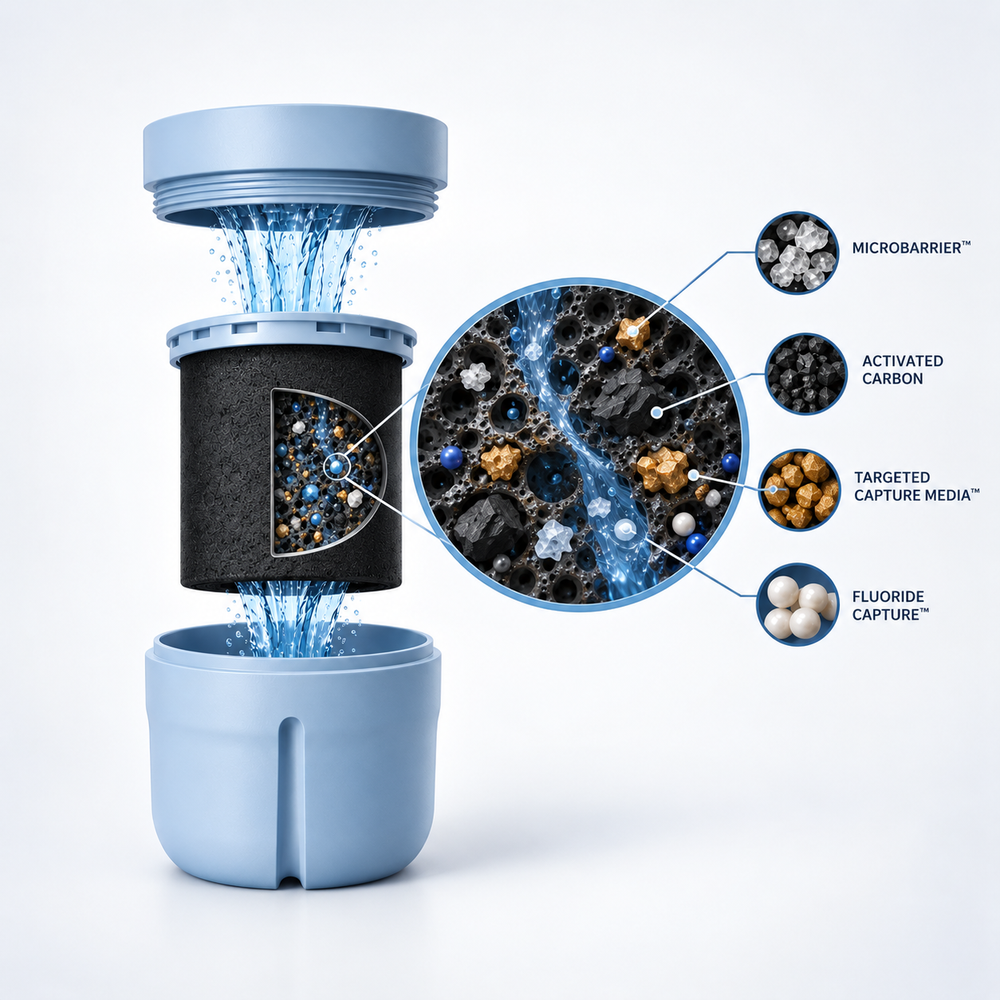
To nie jest zwykły filtr węglowy. To 4 technologie filtracji w jednej opatentowanej matrycy.
Większość dzbanków opiera filtrację głównie na węglu aktywnym. Osma idzie o krok dalej. Multi-Capture™ Carbon Matrix łączy kilka mechanizmów filtracji w jednym solidnym wkładzie — tak, aby różne rodzaje zanieczyszczeń były wychwytywane w różny sposób.
MicroBarrier™
Fizycznie zatrzymuje mikroplastik, rdzę i osady.
Activated Carbon
Ogromna aktywna powierzchnia wychwytuje chlor, pestycydy, farmaceutyki i inne zanieczyszczenia organiczne.
Targeted Capture™
Specjalistyczne media celują w trudniejsze do usunięcia zanieczyszczenia, w tym PFAS, ołów i inne metale ciężkie.
Extended Contact™
Gęsta struktura matrycy wydłuża kontakt wody z medium filtracyjnym, zwiększając skuteczność całego procesu.
Tak Osma łączy zaawansowaną filtrację z wygodą zwykłego dzbanka.
Życie wkładu 550 l na jednym wkładzie · ok. 3 miesiąceMarnowanie wody 0 l ścieku
Minerały wapń i magnez pozostają w wodzie
Co właściwie oznacza „certyfikowane”.
Większość marek filtrów macha logiem NSF bez precyzowania, którą normę spełniają. Numer normy to cała historia. Trzy normy obejmują filtry wody pitnej; Osma jest certyfikowana do wszystkich trzech.
Państwowy Zakład Higieny
Polska atestacja higieniczna. Sprawdzona pod kątem bezpieczeństwa zdrowotnego i kontaktu z wodą pitną. Wymagana dla wszystkich produktów do filtracji wody na polskim rynku.
Skutki zdrowotne
Ołów, rtęć, VOC-i, chrom-6. Norma poważna — protokół wymaga trwałej redukcji przez cały deklarowany okres żywotności filtra.
Nowe zanieczyszczenia
PFAS (PFOA / PFOS), farmaceutyki, pestycydy, hormony. Norma, której większość dzbanków nie ma. NSF/ANSI P473 to podstandard specyficzny dla PFAS.
Sprawdzane przez tych, którym nie płacimy.
Coroczne testy w akredytowanym laboratorium niezależnym. Numer akredytacji publikowany po wydaniu wpisu NSF — w toku w 2026 r.

Co roku świeży dzbanek z linii produkcyjnej trafia do akredytowanego laboratorium zewnętrznego. Laboratorium uruchamia protokoły NSF/ANSI 53 i 401, dokumentuje metodologię, my publikujemy wyniki — pozytywne, negatywne lub neutralne.
Typ próbki: z linii produkcyjnej. Częstotliwość: kwartalna. Pełne dane certyfikacji publikujemy po wydaniu wpisu NSF — nazwa laboratorium i numer akredytacji zostaną podane w tym momencie.
Poproś o podsumowanie testów →Dlaczego to zbudowaliśmy.
Najkrótsza historia marki, jaką umieliśmy napisać uczciwie.
Zaczęliśmy Osmę, bo nie znaleźliśmy dzbanka, który usuwa PFAS na poziomie odwróconej osmozy. Zbudowaliśmy taki, skonstruowany zgodnie z protokołami NSF/ANSI 53 i 401, z certyfikatem PZH, i zobowiązaliśmy się do corocznego retestu z publikacją wyników.
Sześć osób w zespole. Jeden partner produkcyjny, kontraktowo. Każdy mail od klienta trafia do jednej z naszych skrzynek — piszesz, odpisujemy osobiście.
Mówimy wprost.
Najbardziej użyteczna część każdej strony produktu to ta, w której producent przyznaje, czego nie robi.
- Nie dla studni z bakteriami — potrzebujesz lampy UV, nie nas.
- Nie zmiękczacz — jeśli Twoim problemem jest kamień w czajniku, szukaj gdzie indziej.
- Nie subskrypcja zaznaczana domyślnie — nigdy. Wybierasz świadomie.
- Nie 100% czysta woda — magnez i wapń zostają, celowo.
- Nie rekomendowane przez nikogo, komu za to zapłaciliśmy.
- Nie najtańszy dzbanek — i nie próbujemy nim być.